
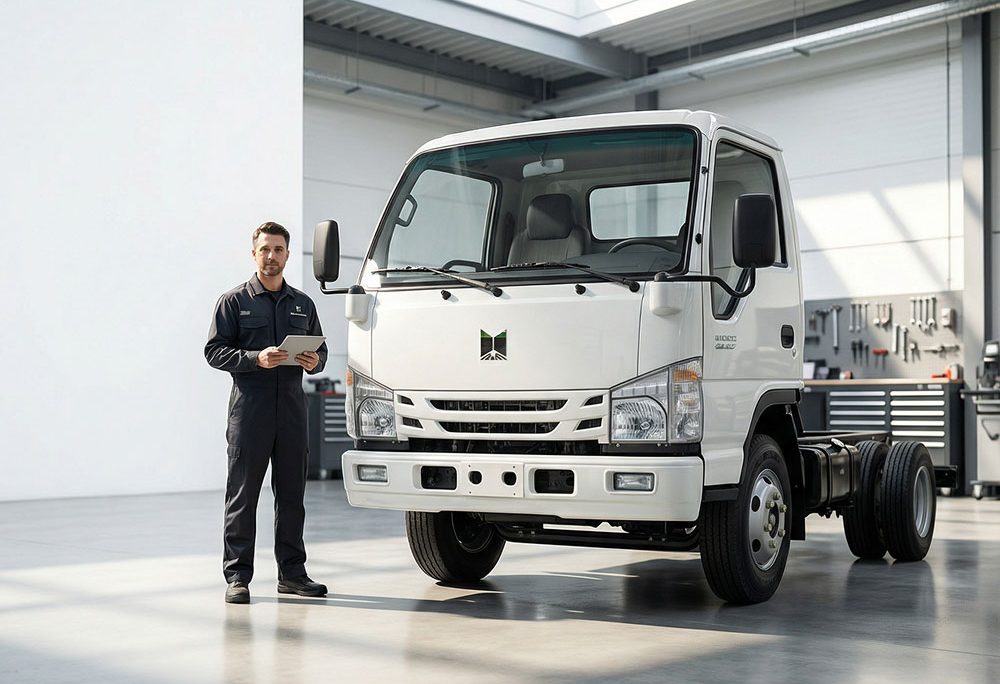
Buying a commercial truck in the UAE is only half the process. Before you can legally drive on Dubai’s roads, your vehicle must be registered with the Roads and Transport Authority (RTA). The requirements for commercial vehicles are stricter than for registering a private car.
This guide walks you through every step: the documents you need, the inspections involved, the fees to expect, and the practical tips that save UAE fleet managers time and back-and-forth with the RTA.
Who Needs to Register a Commercial Truck in Dubai?
Any business or individual operating a commercial truck in Dubai must register the vehicle with the RTA before it takes to the road. This applies to all commercial vehicles in the UAE including pickup trucks, flatbeds, and cargo trucks, regardless of payload class, from a 3-ton delivery truck to a 7 or 8-ton cargo truck.
Registration is tied to the vehicle, not the driver. If you’re building a fleet, each truck requires its own registration and renewal cycle.
What You Need Before You Start
Have these ready before visiting the RTA or using the online portal:
For the vehicle:
- Original purchase invoice from the authorized dealer
- Certificate of Conformity (CoC), issued by the manufacturer or distributor
- Vehicle Identification Number (VIN) / chassis number confirmation
- Customs clearance documents (if the vehicle was imported)
For the business:
- Valid UAE trade licence (matching the commercial activity)
- Emirates ID of the owner or authorized signatory
- Establishment card or company stamp
- A third-party liability insurance certificate must be issued before registration
Important: Your insurance must be in place before your arrival for registration. The RTA will not proceed with any registration without a valid insurance certificate.
Step-by-Step: Registering Your Commercial Truck in Dubai
Step 1: Obtain your Certificate of Conformity
Your authorized dealer provides this. When buying from Qingling UAE, the CoC is issued as part of the purchase documentation. It confirms the vehicle meets UAE road standards and emissions requirements (Euro IV for current Qingling models).
Step 2: Arrange third-party liability insurance
Get quotes from UAE-licensed insurers before registration day. For commercial trucks, premiums vary by payload class, driver profile, and usage type. Comprehensive cover is advisable for fleet operations, as it protects against downtime costs that third-party-only policies won’t cover.
Step 3: Book a vehicle inspection (Tasjeel / Emirates Vehicle Gate)
Commercial trucks in Dubai must pass a roadworthiness inspection at an approved RTA testing centre; Tasjeel or Emirates Vehicle Gate are the primary options. New vehicles from authorized dealers typically pass the first time, but the inspection is mandatory regardless.
The inspection checks:
- Brakes and brake system condition
- Lights, indicators, and mirrors
- Tyres and wheel alignment
- Chassis integrity
- Emissions compliance
Step 4: Submit your documents to the RTA
Once the vehicle passes inspection, submit your full documentation pack at an RTA service centre or via the RTA Dubai app. Required at this stage:
- Passed the inspection certificate
- Insurance certificate
- Trade licence copy
- Emirates ID/passport copy
- Purchase invoice and CoC
- Customs clearance (if applicable)
Step 5: Pay registration fees
Commercial vehicle registration fees in Dubai depend on the vehicle’s payload and classification. As a general guide for 2026:
Vehicle Class | Approximate Annual Fee (AED) |
Light commercial (up to 3.5T) | AED 620–820 |
Medium commercial (3.5T–7T) | AED 820–1,100 |
Heavy commercial (7T+) | AED 1,100–1,500+ |
Step 6: Collect your registration card and plates
Once payment is processed, you receive the vehicle registration card (Mulkiya) and commercial plates. The Mulkiya must be kept in the vehicle at all times.
Key Things UAE Fleet Managers Should Know
Renewal is annual. Commercial truck registrations in Dubai are renewed every 12 months. Renewal requires a fresh inspection and updated insurance. Late renewal incurs daily fines. Set a calendar reminder 30 days before expiry.
Each Emirate registers separately. A truck registered in Dubai can operate across the UAE, but if your business is headquartered in Abu Dhabi or Sharjah, registration is handled by that Emirate’s transport authority (Abu Dhabi: ADNOC/DMT; Sharjah: SRTD).
Modifications require re-inspection. Any structural modification to your truck, including cargo body changes, crane fittings, or chassis extensions, must be declared and re-inspected before returning to the road.
Buy from an authorized distributor. Grey-market trucks often lack the Certificate of Conformity required for UAE registration, creating delays, additional inspection costs, and potential rejection. Vehicles purchased through Qingling UAE’s authorized dealership come with full documentation, CoC, warranty, and compliance papers, making the registration process straightforward.
The Bottom Line
Registering a commercial truck in Dubai is a straightforward process once you have gathered your documents. The steps are as follows: obtain your Certificate of Conformity (CoC) from the dealer, purchase insurance, pass the vehicle inspection (Tasjeel), submit the documents to the RTA, pay the fees, and collect your vehicle registration document (Mulkiya) and license plates.
Buying from an authorized distributor like Qingling UAE simplifies the entire process; your documentation arrives complete, your truck is built to UAE emissions standards, and the after-sales service team can advise on compliance and renewal when the time comes.
Explore Qingling’s commercial vehicles or contact the Dubai team to discuss purchase, documentation, and fleet setup.
